
The art of writing comes naturally to some, while others struggle to craft simple pieces. In fact, recent researches show that 50% of US high-school graduates are not prepared for college-level writing. Further, a study conducted a few years back showed that 92% of college educators believed that their students struggled with writing confidence.
Considering the fact that writing is one of the key skills every student must have, it is necessary for them to work on it. So, to ensure you don’t fall behind and enhance your writing skills, we have put together a few writing tips.
Let’s learn how to write.
Improve Writing Skills with these 15 Writing Tips
Writing is an art. You need to invest time to practice and take every piece you write seriously. Renowned writers practice extensively and employ various techniques to write bestselling books. The tips that we will take you through can help you improve writing skills and craft better assignments and papers:
1. Read, Read, Read
You cannot write if you don’t have a reading habit. If you feel that you can write on any topic at any time and ideas will flow automatically, you are mistaken. Reading books, articles, or any other materials can help you learn how to structure any topic and get more ideas.
Go beyond the story the author is taking you through. Pay close attention to the writing techniques and style the author has used. Also, know how to verify online class service legitimacy before choosing a provider for academic writing help.
2. Practice Writing Regularly
There’s no alternative to practice. You need to practice writing regularly. Don’t wait for your instructor to assign something. Find a topic and write on it just for practice. Let’s say you have recently watched a web series on Netflix. Go ahead and write about it, talk about why you liked it, or did not like it, and whether others should watch it or not.
You will not have to sit with a pen and paper always. You can create a post about movies, web series, or music on social media and use it as a practice. Believe it or not, this can be a good way to practice. You will not be bound by rules and will be able to speak your mind. Isn’t that what writing is all about?

3. Find a Space to Write
Writing is not possible if you have people constantly talking over your head. If you read about renowned writers, you will see how they always looked for a quiet place to concentrate on their writing. For example, Charles Dickens liked to write at his beloved desk and would often have it shipped with him if he was traveling.
Finding the right space is one of the effective tips to become a better writer. You can concentrate and write your essays, assignments, and other papers.
4. Be Curious
Curiosity is key to good writing. You need to show an interest in knowing new things. Now, how would you relate that to academic writing? Let us help you with it. Your instructor assigns a topic to you. The first thing you do is show an interest in understanding what the topic is about and how to approach it. Further, you must also be curious about looking for resources to find the necessary information and to understand what others have talked about.
Show an interest in knowing about the topic you are working on. That way, you will be able to write well and craft a perfect paper. This is one of the effective writing strategies for students and can help you be a better writer.
5. Know the Word Count
A mistake students make while writing is that they end up writing a lot more than expected. You need to understand how much the topic demands and write accordingly. In the case of academic papers, the instructor specifies the word count. You must check the same and write your paper.
This is one of the effective academic writing tips every student needs to follow. It will help you become a better writer and restrict your ideas to a certain word count.

6. Research Well
Good writing depends on the information you provide. Therefore, if you are willing to be a good writer or improve your writing skills, make a habit of conducting proper research. While it’s similar to being curious, research is a bit more than that. You need to find information relevant to your topic and use it to justify your point.
For example, if you are working on an argumentative essay, you must provide necessary data and supporting information to back up your stand on the topic. This makes research one of the most significant parts of writing and is also one of the best writing tips for students.
7. Maintain a Journal
An effective way to improve your writing is by maintaining a journal. Make a note of anything you find interesting or inspirational. When it comes to academic writing, you might want to note down a few quotes from experts you come across. Use them in your paper to add more credibility.
Additionally, starting with an expert quote or using them in between will help you strengthen your points. Readers will also be able to rely on what you are saying when they see quotes from experts and understand that you have done original research to write your papers.
8. Plan before Writing
One of the effective tips for writers who are struggling to make their write-up better is to plan well. Jot down the points you want to discuss in the essay or assignment. Also, create an outline, arranging the points properly to maintain a logical flow. It will not only improve your writing skills but will also help you complete your write-up quickly.
This is one of the most effective assignment writing tips for students struggling to complete tasks within a deadline.
9. Improve Your Grammar
Writing well is impossible if you don’t work on your grammar. You will not be able to convey your message clearly if you don’t have a strong command of grammar. The key lies in practising. Even when you are writing a message to your friend, double-check if the grammar is correct or not. It might sound funny, but this practice will help you in the long run.
Adding on, when you go through anything, be it a hoarding or an advertisement, check and identify if everything is grammatically correct or not. Thinking about grammar throughout the day will help you improve.
10. Uniform Tense Usage
Good write-ups stick to one form of tense throughout. Therefore, do not switch between past, present, and future tenses while writing your papers. While there’s no rule as such to maintain the same tense throughout the paper, it is recommended to stick to one form.
Consistency is the key to good writing. Mixing tenses will only make things confusing for readers, and you will not be able to keep them glued till the end.
11. Keep it Simple
Readers like to read pieces that are easy to understand. Students feel that using a few unique words that are hard to pronounce and difficult to understand can make their essays and assignments better. But that’s not right. Keep yourself in the reader’s position and ask yourself if you would like to read a piece that’s very difficult to understand. The answer will obviously be a ‘no.’
Therefore, to ensure you convey your message correctly to the readers, keep your write-up simple. This is one of the fantastic writing tips for essays and assignments.
12. Keep Room for Further Discussion
One of the effective ways to make readers more interested in reading your write-up is to keep room for further discussion. Let us give you an example. Suppose you are writing an argumentative essay on ‘Is gaming a good career choice?’ You fully support the topic and share your perspective, ignoring what others might think. This will not go down well with the readers.
The readers might want to share their own perspective or research more on the topic to review your points. Therefore, to make your write-up more interesting, keep room for further discussion. Even experts from the best online class help services ask students to keep their essays open-ended.

13. Read What You Write
Famous writers like F.Scott Fitzgerald and Ernest Hemingway worked with the famous, influential editor Maxwell Perkins for proofreading and editing assistance. Now that leaves no room for you to skip the proofreading process, right? Since the stalwarts also needed an extra pair of eyes to identify and rectify their mistakes, you must not submit your essay without reading what you wrote.
Go through what you wrote line by line, or seek professional writing guidance to understand where you are lacking to ensure your write-up is flawless. The essay writing help websites also guide students with the ways to write their papers and help them rectify minor mistakes.
14. Start on a Strong Note
A writing advice for beginners and students is to start on a strong note. Your introduction is where you grab the attention of your readers. So, if you are writing an essay or working on an assignment, make sure to start strongly so that the readers will read the entire piece. For example, if you are working on a comparative essay, similar to articles like TakeMyClassOnline.net vs BoostMyGrade, you must start in a way that builds trust among readers.
The readers must trust your judgment and read on to learn which one is better according to you. The objective here is to persuade the reader to trust you and influence their choice.
15. Say No to Plagiarism
Students often make the mistake of copying and pasting information from various sources to get things done on time. While time management is a serious concern among students, plagiarism is not the solution. Plagiarism will only result in bad grades and a negative reputation in your academic institution.
One of the best writing tips and tricks for students under time pressure is to seek online writing help from experts. They can help write and submit perfect and original papers on time.
That brings us to the end of the discussion. But before we call it a day, let’s help you learn how to find good writing tips online.
How to Find Good Writing Tips Online?
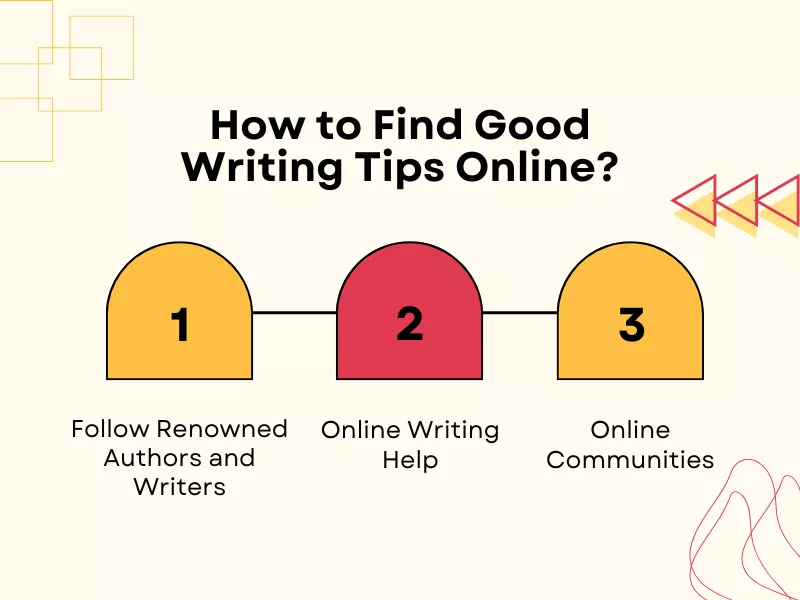
The question has already been answered, though. The writing tips are right in front of you. However, to ensure you don’t fall short on ideas, here’s where you can find more writing tips online:
A. Follow Renowned Authors and Writers
Look for profiles of authors and writers and follow them. Go through the tips they share and follow the tips to improve academic writing quickly.
B. Online Writing Help
Sign up with a popular and trusted online writing help website to get expert assistance with writing. You can go through reviews of the websites, like the one on Assignments4U.com review before signing up.
C. Online Communities
Engage with writers on online communities like Reddit to get more tips on how to improve writing.
All these will help you improve your writing skills and craft good essays and assignments.
To End with,
Writing is one of the key skills. You must work on improving your writing skills from day one. Implementing the tips mentioned above will help you work on your writing skills and be a good writer. You can also hire an expert to get creative writing tips and use them to ensure your essays have all the right elements to keep readers glued to them till the end.
Above all, it’s you who needs to be proactive and practice writing to improve yourself. So, start implementing the tips to be a better writer.
Frequently Asked Questions
What writing habits do professional writers recommend?
Professional writers recommend developing consistent writing habits such as writing daily, setting specific goals (like word count targets), reading widely, revising thoroughly, and maintaining a distraction-free workspace. Many also emphasize outlining before writing and separating the writing and editing phases to improve flow and creativity.
Why are writing tips important for new writers?
Writing tips help new writers avoid common mistakes and build a strong foundation in grammar, style, and structure. They provide guidance that accelerates learning, improves clarity, and boosts confidence. Following proven tips also helps beginners discover their unique voice while adhering to professional standards.
How do I choose which writing tip to follow when there are many?
Start by identifying your writing goals, whether you want to improve storytelling, academic writing, or content creation. Then, focus on tips that address your weak areas. It’s better to apply a few relevant tips consistently than to follow dozens sporadically. Over time, experiment to find what best suits your writing style and workflow.
What tools or apps help me apply writing tips more effectively?
Several tools make it easier to implement writing tips in practice:
- Grammarly and ProWritingAid – for grammar, clarity, and tone suggestions
- Hemingway Editor – for improving readability and conciseness
- Scrivener or Notion – for organizing ideas and managing large projects
- FocusWriter or Pomodoro Timer – to build consistent writing habits and eliminate distractions
How can I improve my storytelling skills with simple writing tips?
To enhance storytelling:
- Begin with a strong hook to capture attention
- Develop relatable characters with clear motivations
- Use the “show, don’t tell” technique to create vivid imagery
- Maintain conflict and resolution to keep readers engaged
- Revise drafts to refine pacing, dialogue, and emotional depth
Small, consistent improvements in these areas can significantly elevate your storytelling.
Are AI-generated writing tips better than traditional writing books?
AI-generated writing tips are faster, personalized, and adaptive, offering real-time feedback on your work. However, traditional writing books provide deeper insights, literary examples, and structured learning that AI tools may not fully replicate. The best approach is to combine both—use AI for quick guidance and books for mastering craft and theory.
Are there any apps that provide daily writing tips and exercises?
Yes! Several apps offer daily writing prompts and tips, such as:
- Daily Prompt – creative prompts for short stories
- Writing Challenge App – fun, timed challenges for creativity
- Writer Plus – minimalist writing with daily tip reminders
- MasterClass and Reedsy Learning – expert lessons and exercises delivered via email or app
What are the most effective writing tips for non-native English speakers?
For non-native English speakers, effective writing tips include:
- Reading English content daily to improve vocabulary and sentence flow
- Practicing short writing exercises regularly
- Using grammar tools like Grammarly or Ginger
- Learning idioms and tone variations from native sources
- Revising with feedback from native speakers or online writing communities
These habits help improve fluency, accuracy, and natural expression over time.

Leave feedback about this